Pet Poshan

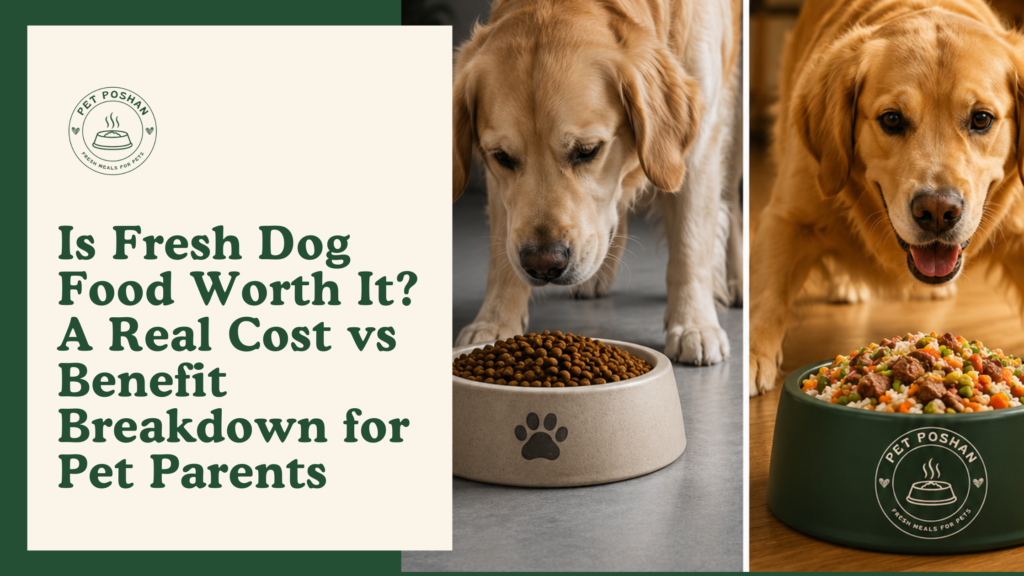
Is Fresh Dog Food Worth It? A Real Cost vs Benefit Breakdown for Pet Parents

Quick Answer  Yes, fresh dog food often costs more than kibble, but many pet parents find the investment worthwhile because of the quality of ingredients, ingredient transparency, digestibility, and the overall feeding experience. The real question isn’t just what you pay per meal, it’s what your dog gets from that meal. If you’ve ever explored fresh dog food, you’ve probably had the same reaction as many pet parents: “This looks great, but is it really worth the extra cost?” It’s a fair question. After all, kibble has been the standard choice for years, and fresh food often comes with a higher price tag. But when evaluating dog food, the real question isn’t just: “How much does it cost?” It’s also: “What am I getting for that cost?” Let’s break it down honestly. The True Cost of Dog Food: Looking Beyond the Price Tag When comparing dog food options, most people focus on the cost of a bag or the cost per meal. While price matters, it’s equally important to consider: Ingredient quality  Ingredient transparency  Digestibility  Nutritional value  Feeding experience  Long-term wellbeing Just like human food, two meals can have completely different nutritional value even if they contain the same number of calories. Fresh Dog Food vs Kibble: What’s the Difference? At Pet Poshan, our recipes are made using real, recognizable ingredients such as: Chicken breast  Chicken liver  Chicken gizzard  Chicken feet  Fish  Eggs  Vegetables  Rice  Our meals are: ✅ Prepared fresh every day ✅ Made using ingredients you can actually recognize ✅ Gently cooked in small batches to preserve nutrition and flavour ✅ Free from artificial preservatives ✅ Stored and delivered fresh to maintain quality 👉 In simple terms, it’s real food made for dogs – not highly processed pellets. Kibble Typically contains: Meat meals or rendered protein sources Fillers and starches Artificial preservatives Added flavours Synthetic nutrient blends It is usually: Manufactured in large batches  Processed at high temperatures  Designed for extended shelf life  Packaged for storage for months  👉 While convenient, the focus is often on shelf stability rather than ingredient freshness. 👉 Read more: What Actually Goes Into Your Dog’s Bowl? Fresh vs Kibble Ingredients Cost Comparison: Fresh Food vs Kibble While costs vary based on breed, size, and feeding requirements, fresh food generally costs more than commercial kibble. What You’re Paying For With fresh food, you’re paying for: ✅ Real ingredients you can identify ✅ Fresh preparation ✅ Ingredient transparency ✅ Higher moisture content ✅ Convenience of balanced meal preparation Unlike shelf-stable food designed to sit in storage for months, fresh food requires careful sourcing, preparation, storage, and delivery. That’s one of the reasons fresh food typically costs more than kibble. The Benefits Pet Parents Commonly Notice After Switching Every dog is different, but many pet parents report positive changes after transitioning to fresh food. Better Digestion Fresh meals contain natural moisture and whole-food ingredients that are often easier for dogs to digest. Many pet parents notice: More consistent stools  Reduced digestive discomfort  Improved overall gut health Healthier Skin and Shinier Coat A nutrient-rich diet may contribute to: Shinier coats Reduced dryness Healthier skin Increased Meal Excitement Dogs are naturally attracted to the aroma, texture, and taste of fresh food. For many pet parents, mealtimes become something their dogs genuinely look forward to. Improved Energy Levels When dogs receive balanced nutrition from quality ingredients, it often reflects in their daily activity levels. Many pet parents observe: More playfulness  Better stamina  Improved overall vitality The Hidden Cost of Cheap Nutrition A lower food bill today doesn’t always mean lower overall costs. When evaluating dog food, it’s important to think beyond the immediate purchase price. Poor-quality nutrition can sometimes contribute to: Digestive issues Weight management challenges Poor coat quality Reduced vitality Lower overall wellbeing While nutrition alone doesn’t determine health outcomes, it plays a significant role in your dog’s quality of life. When Fresh Food May Be Especially Worth Considering Fresh food may offer particular value for: Puppies Supporting healthy growth and development. Senior Dogs Providing nutrition that is often easier to digest. Picky Eaters Encouraging consistent eating habits. Dogs with Sensitive Digestion Reducing reliance on heavily processed ingredients. Health-Conscious Pet Parents Those who prioritize ingredient transparency and quality. Why More Pet Parents Are Making the Switch Today’s pet parents are asking better questions. Instead of simply asking: “How much does this food cost?” They’re asking: “What am I feeding my dog every day?” “Can I recognize the ingredients?” “Do I trust what’s in the bowl?” That shift is one of the reasons fresh dog food in India is gaining popularity. Pet parents want greater transparency, better ingredient quality, and nutrition they can understand. How Pet Poshan Delivers Value Beyond the Bowl At Pet Poshan, we believe trust starts with transparency. That’s why our meals are: Prepared fresh every day  Made with real ingredients  Gently cooked in small batches  Free from artificial preservatives  Designed to provide balanced nutrition  We don’t believe pet parents should have to guess what’s inside their dog’s food. Because every ingredient should have a purpose. So, Is Fresh Dog Food Worth It? If you’re only comparing the price per kilogram, fresh food will usually cost more. But if you’re evaluating: Ingredient quality Digestibility Transparency Nutritional value Daily feeding experience Then the conversation becomes much bigger than cost alone. For many pet parents, fresh food isn’t just an expense. It’s an investment in their dog’s health, happiness, and quality of life. Ready to See the Difference for Yourself? Many pet parents start with a trial before making a full switch. 👉 Explore Fresh Dog Food Meal Plans 👉 Learn How to Transition Your Dog to Fresh Food 👉 Compare Fresh Food vs Kibble Ingredients FAQs Is fresh dog food worth the extra cost? Many pet parents believe so because fresh food offers real ingredients, greater transparency, daily preparation, and a feeding experience that prioritizes freshness over shelf life. Why is fresh dog food more expensive than kibble? Fresh food uses real ingredients, requires refrigeration,

Is Fresh Dog Food Worth It? A Real Cost vs Benefit Breakdown for Pet Parents Read More »
What Actually Goes Into Your Dog’s Bowl? Fresh vs Kibble Ingredients Explained

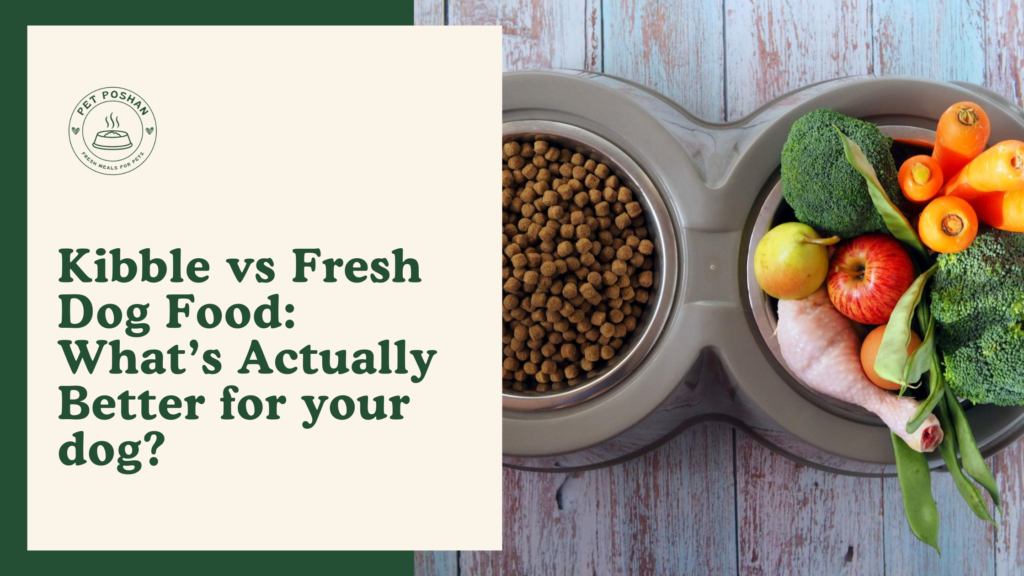
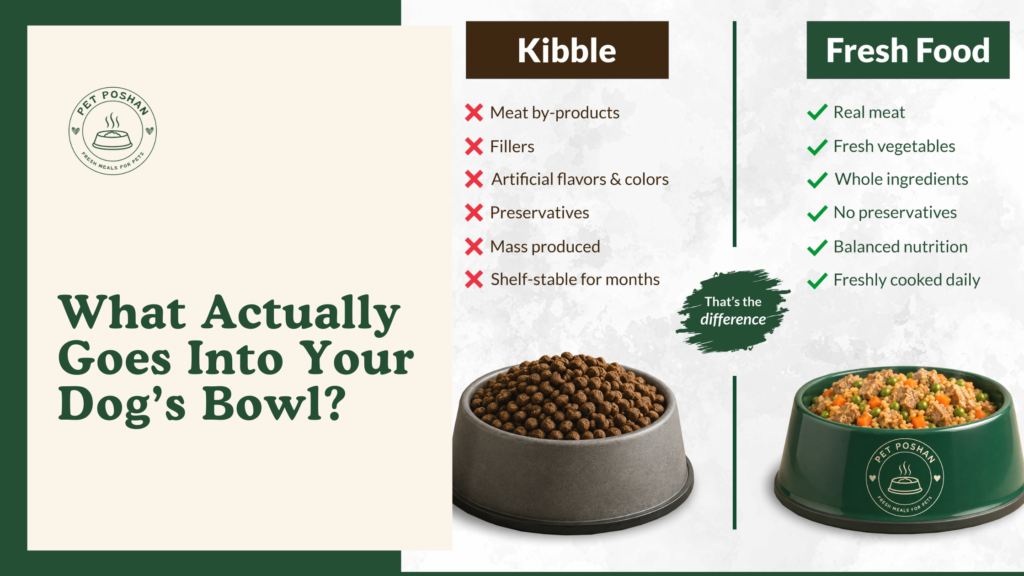
What Actually Goes Into Your Dog’s Bowl? A Breakdown of Fresh vs Kibble Ingredients Fresh dog food is made with whole, natural ingredients like real meat, vegetables, and grains, while kibble is typically made using processed meat meals, fillers, preservatives, and additives. Fresh food is minimally processed, whereas kibble undergoes high-heat processing that can reduce nutrient quality. Most pet parents don’t actually know what goes into their dog’s bowl. You read labels. You see words like “chicken,” “high protein,” and “complete nutrition.” But what do they really mean? Because what your dog eats every day directly impacts: Digestion  Energy levels  Skin and coat health  Long-term wellbeing  Let’s break it down – ingredient by ingredient – so you can make an informed choice. Fresh Dog Food vs Kibble: Ingredient Breakdown 1. Protein Source Fresh Dog Food: Real, identifiable meats (chicken, mutton, fish)  Cooked in small batches  Easier to digest  Kibble: Meat meals (chicken meal, meat by-products)  Rendered at high temperatures  May include unspecified animal parts  👉 What this means: Protein quality and digestibility are often higher in fresh food. 2. Carbohydrates & Fillers Fresh Dog Food: Whole ingredients like rice, vegetables, millets  Provide natural fibre and nutrients  Kibble: Corn, wheat, soy, or starch-heavy fillers  Used to bulk up the product  👉 What this means: Kibble often prioritizes shelf stability over nutritional quality. 3. Fats & Oils Fresh Dog Food: Natural fats from meat or added healthy oils  Support skin, coat, and energy  Kibble: Processed fats are sprayed after cooking  Can degrade over time  4. Preservatives & Additives Fresh Dog Food: No artificial preservatives  Uses natural cooking and refrigeration  Kibble: Requires preservatives to extend shelf life  May include artificial colours and flavours  👉 What this means: The longer the shelf life, the more processing is involved. 5. Processing Method Fresh Dog Food: Cooked gently  Minimal processing  Retains more nutrients  Kibble: Extruded at very high temperatures  Highly processed  Nutrients are often added back artificially  Why Ingredient Transparency Matters Dogs can’t tell you how they feel, but their bodies show it. Low-quality ingredients can lead to: Poor digestion  Dull coat  Low energy  Long-term health issues  👉 Knowing what’s inside the food helps you prevent problems before they start. What Most Dog Food Labels Don’t Clearly Tell You “Chicken meal” ≠ fresh chicken  “Complete and balanced” doesn’t mean high quality  Long ingredient lists often indicate heavy processing  👉 The simpler and more recognizable the ingredients, the better. Fresh Dog Food in India: A Growing Shift More pet parents in India are moving towards fresh food because they want: Better ingredient clarity  Less processed meals  Improved health outcomes for their dogs  This shift is not about trends – it’s about awareness. So, Which One Should You Choose? There’s no one-size-fits-all answer. But here’s a simple way to think about it: If convenience and shelf life matter most → kibble  If ingredient quality and long-term health matter more → fresh food  👉 Many pet parents today are choosing a gradual shift towards fresh meals. How Pet Poshan Focuses on Ingredient Transparency At Pet Poshan, we believe you should know exactly what goes into your dog’s bowl. That’s why we use: Real, whole ingredients  Clearly defined recipes  No artificial preservatives  So you’re not guessing – you’re choosing with confidence. Ready to Know Exactly What Your Dog Is Eating? Better food starts with better awareness. If you’re exploring fresh dog food options: 👉 Explore Fresh Dog Food Meal Plans 👉 Learn: How to Transition Your Dog to Fresh Food FAQs  What is the difference between fresh dog food and kibble? Fresh dog food uses real, minimally processed ingredients, while kibble is highly processed and often contains additives and preservatives. Is kibble bad for dogs? Not necessarily, but it is more processed and may be less digestible compared to fresh food. What ingredients should I avoid in dog food? Avoid vague terms like “meat by-products,” artificial preservatives, and excessive fillers. Is fresh dog food better for digestion? Yes, fresh food is generally easier to digest due to higher moisture content and natural ingredients.

What Actually Goes Into Your Dog’s Bowl? Fresh vs Kibble Ingredients Explained Read More »

How to Transition Your Dog to Fresh Food (Without Upsetting Their Stomach)

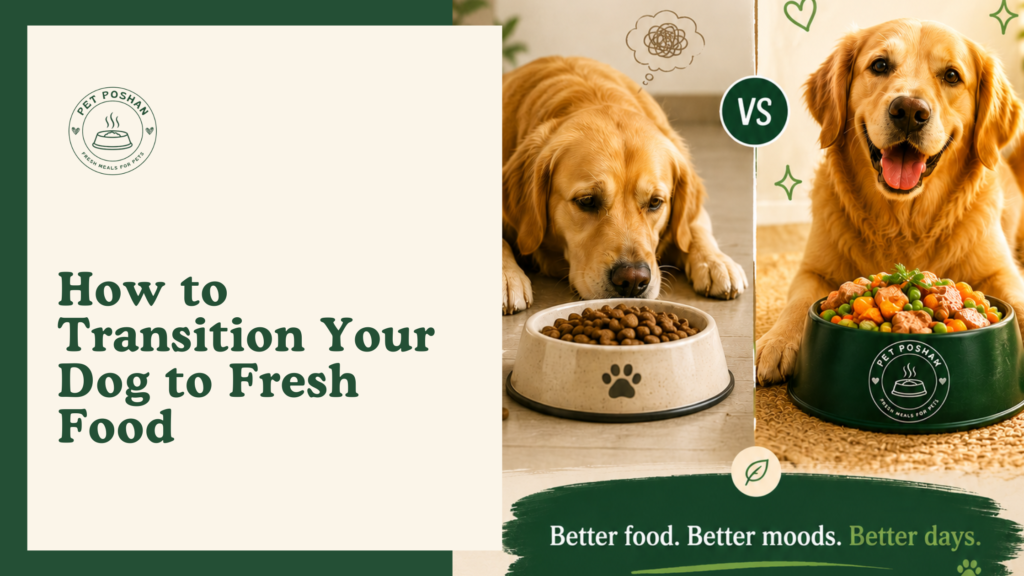
Switching your dog’s diet from kibble to fresh food can feel risky. You may have heard things like: “My dog got loose motions after changing food.” “He stopped eating completely.” So even if you want to feed better, you hesitate. The truth is: 👉 It’s not fresh food that causes issues. 👉 It’s how the transition is done. Follow the right process, and most dogs switch comfortably – often with noticeable health improvements. Why Dogs Get an Upset Stomach When Changing Food Your dog’s digestive system is highly adaptive – but not instant. When you suddenly change food: Gut bacteria need time to adjust Digestive enzymes shift based on diet Texture + moisture differences affect digestion A sudden switch = temporary imbalance → loose stools, gas, or refusal to eat 👉 That’s why gradual transition is non-negotiable when you switch dog food without upsetting the stomach.  The Best Dog Food Transition Plan (7-Day Method)  Here’s a simple, vet-recommended way to switch your dog safely: What Happens in 7 Days After Switching 👉 This is a normal, gradual dog food transition process. What to Expect During the Transition Some small changes are completely normal: Slightly softer stools Increased appetite (fresh food is more palatable) More excitement at mealtime What’s not normal: Continuous diarrhoea Vomiting Lethargy If you notice these, slow down the transition instead of stopping completely. Pro Tips to Switch Dog Food Without Upsetting the Stomach 1. Start with One Meal Instead of changing all meals at once, begin with just one. 2. Stick to a consistent schedule Dogs digest better with routine. 3. Avoid mixing too many new foods Keep it simple – don’t add treats or extras during transition. 4. Don’t Worry About Water Intake Fresh food has higher moisture – reduced water drinking is normal. Common Mistakes Pet Parents Make Switching overnight out of excitement Feeding unbalanced homemade food Giving up too early after minor stool changes Remember: 👉 Transition discomfort is usually temporary 👉 Long-term benefits far outweigh the short adjustment phase Fresh Dog Food Benefits After Transition Once your dog adapts, you’ll likely notice: Better digestion Shinier coat Improved energy Healthier weight Because fresh food is: Minimally processed Free from artificial preservatives Closer to what your dog’s body naturally thrives on 👉 Read more on Fresh Food vs Kibble for Dogs How Pet Poshan Helps You Transition Safely We simplify the switch so your dog adapts comfortably: With Pet Poshan: Pre-portioned, fresh, ready-to-serve meals Portion guidance tailored to your dog Recipes designed for easy digestion  So your dog adapts comfortably – without stress. Ready to Switch Your Dog to Fresh Food? A smooth transition comes down to one thing: doing it right. Start slow, stay consistent – and your dog will adjust comfortably. If you want expert support and balanced, fresh meals: 👉 Explore Fresh Dog Food Meal Plans Start Your Dog’s Fresh Food Journey Today FAQs How to transition a dog to fresh food safely? Use a gradual 7-day transition plan by slowly increasing fresh food while reducing old food.  How long does it take to transition a dog to fresh food? Typically, 7-10 days using a gradual dog food transition plan. Can I switch my dog to fresh food immediately? No, sudden changes can upset digestion. Always transition gradually. What if my dog gets loose motions after changing food? Slow down the transition and give the digestive system more time to adjust.

How to Transition Your Dog to Fresh Food (Without Upsetting Their Stomach) Read More »

Is Your Dog’s Food Falling Short? 7 Signs It’s Time for a Switch

You measure the food. You stick to a routine. You’ve chosen something that should be good. And still… your dog feels off. Not sick. Just not thriving. Maybe they’re a little low on energy. Maybe their coat doesn’t shine like it used to. Maybe mealtimes feel more routine than exciting. Dogs can’t tell you when something isn’t working. But their body always does. You just need to know what to look for. 🐶 1. Low or Inconsistent Energy   If your dog: Tires quickly Plays for a few minutes, then stops Seems less interested in walks …it may be a sign they’re not getting steady, usable energy from their food. 👉 If this sounds familiar, here’s a deeper look at why your dog may still feel low on energy even after eating well. 💨 2. Frequent Gas or Bloating   Occasional gas is normal. Frequent bloating is not. This often points to: Low-quality fillers Highly processed ingredients Poor digestibility Food that isn’t properly digested tends to ferment in the gut, causing discomfort. 🪶 3. Dull Coat or Dry Skin   A healthy dog’s coat usually has a natural shine. If you notice: Dry, brittle fur Excess shedding Flaky skin …it may signal a lack of essential fatty acids like Omega-3 and Omega-6, or poor absorption of nutrients. 😐 4. Low Excitement at Mealtimes   Food should be the highlight of your dog’s day. If your dog: Walks away from the bowl Eats slowly or reluctantly Needs coaxing …it’s worth asking: 👉 Is the food actually appealing or just familiar? 💩 5. Poor Digestion (Stools Tell the Truth)   What you pick up on walks tells you more than any label. Healthy: Firm, consistent, easy to pick up Red flag: Loose, inconsistent, strong-smelling stools This usually means: Poor nutrient absorption Gut imbalance Food not suited to your dog ⚖️ 6. Weight Fluctuations   If your dog is: Gaining weight easily Or losing weight despite eating …it could point to: Imbalanced nutrition Incorrect calorie density Low bioavailability of nutrients 😴 7. Constant Hunger (But No Satisfaction)   If your dog always seems hungry, even after meals: The food may lack real nutrients The body isn’t feeling satisfied They may be full, but not truly nourished. Sometimes, these signs come from small habits we don’t even realise. Here are some of the most common dog feeding mistakes pet parents make. 🧠 What This Really Means These signs rarely appear overnight. They build slowly. Quietly. And because they’re subtle, they often get dismissed as: 👉 “That’s just how my dog is.” But often, it’s not the dog. It’s the food. If you’re wondering whether your current food might be the issue, here’s a simple breakdown of the difference between kibble and fresh dog food.  🍲 What Better Food Looks Like   Food that truly works for your dog should: Be easy to digest Provide steady energy Support gut health Improve skin and coat Actually excite them at mealtime Fresh, minimally processed meals tend to do this better because they’re closer to what a dog’s body naturally understands. 👉 If you’re unsure what a balanced diet should actually look like, this guide on what to feed your dog daily in India breaks it down simply. 🔄 A Note on Switching Food If you decide to make a change, avoid switching overnight. Instead: Mix new food with current food Gradually increase over 7-10 days This helps prevent digestive upset and allows your dog to adjust comfortably. 🎁 See the Difference for Yourself   You don’t need to guess. You can observe. Try a fresh meal and notice: Their energy Their excitement Their digestion Try a FREE Sample Real ingredients. Home-style cooking. No pressure, just a chance to see what works better for your dog. Free samples available from the 16th to the 30th April 2026. 🐾 About Pet Poshan Pet Poshan makes fresh, home-style meals for dogs using real ingredients and no preservatives. Prepared daily and delivered fresh to select neighbourhoods in Pune.

Is Your Dog’s Food Falling Short? 7 Signs It’s Time for a Switch Read More »

Kibble vs Fresh Dog Food: What’s Actually Better for your dog?

Every morning, you scoop out that familiar cup of brown pellets. Your dog eats it, tail wagging. You assume it’s doing its job, because the pack says “complete and balanced.” But then you start noticing things. A little gas. Dry, flaky skin. Restlessness after meals. Energy that feels… inconsistent. Nothing alarming. Just not quite right. So you wonder: 👉 Is the food actually working? 🥣 What’s Really Inside Kibble? Kibble is made through a process called extrusion. Ingredients, often grains, meat by-products, and fillers, are ground into a paste, cooked at very high temperatures, and shaped into pellets. This process: Kills harmful bacteria ✔ Extends shelf life ✔ But also reduces natural nutrients ✖ To compensate, manufacturers add synthetic vitamins and minerals back in. So when you read: “Fortified with calcium and Vitamin E.” …it usually means those nutrients were added after processing, not naturally present. Even ingredients like “chicken meal” can be misleading. It’s not fresh chicken. It’s a rendered, dried powder made from parts like bone, skin, and tissue. Not necessarily harmful, but very different from real, whole food. Here’s a simple breakdown of what a balanced dog diet should actually look like → Dog Diet Guide India 🔍 Kibble vs Fresh Food (Simple Comparison)   👉 That moisture difference matters more than most people realise. Dogs naturally get a large portion of hydration from food. Kibble is extremely dry, meaning your dog’s body has to compensate every single day. ⚡ Digestion: Where the Real Difference Shows A dog’s digestive system is built for real, minimally processed food. When dogs switch to fresh food, many pet parents notice: Smaller, Better Stools: Fresh food is more bioavailable; the body absorbs more and wastes less. Less Gas & Bloating: Whole ingredients are gentler on the gut compared to heavily processed fillers. Improved Overall Comfort: No heaviness, no sluggishness after meals. This isn’t a trend; it’s simply how digestion works when food is closer to its natural form. If your dog has been feeling low on energy despite eating well, here’s why that happens → Reasons for Low Energy 🔋 Energy & Vitality: The “Fresh Food Effect” Energy isn’t just about how much your dog eats. It’s about what their body can actually use. Kibble-Based Diets: High carbs → quick energy spikes Followed by dips → lethargy Fresh Food Diets: Protein + healthy fats → steady energy More consistent activity levels A noticeable “spark” returning Many dog parents describe it as: 👉 “They just seem more like themselves again.” 🧠 What “Complete & Balanced” Really Means Here’s something most people don’t know: “Complete and balanced” means the food meets minimum nutritional standards. Not optimal. Just adequate. Think of it like this: A person could survive on fortified cereal and supplements. But would they feel their best? Fresh food delivers nutrients in their natural form, which the body: Recognizes better Absorbs more efficiently Uses more effectively 🤔 So… Is Kibble Bad? Not necessarily. Kibble is: Convenient Affordable Widely used And good-quality kibble is definitely better than poor-quality food. But if your dog is showing signs like: Low or inconsistent energy Digestive issues Dull coat Lack of enthusiasm …it might be worth looking beyond convenience, and into the bowl. 🌱 A Smarter Way to Start You don’t need to switch everything overnight. A simple approach: Add fresh food to one meal a day Mix it into your dog’s current diet Observe changes over a few days Sometimes, even small changes create visible results. 🎁 See the Difference for Yourself The best way to decide isn’t by reading labels. It’s by watching your dog. Try a fresh meal and notice: Their energy Their excitement Their digestion Try a FREE Sample Real ingredients. Home-style cooking. No pressure, just a better way to feed. Free samples available from the 16th to the 30th April 2026. 🐾 About Pet Poshan At Pet Poshan, we cook fresh meals for dogs every day using simple, whole ingredients. No fillers. No shortcuts. Just real food, made to support long-term health.

Kibble vs Fresh Dog Food: What’s Actually Better for your dog? Read More »

Why Your Dog Feels Low Energy (Even After “Premium” Food)

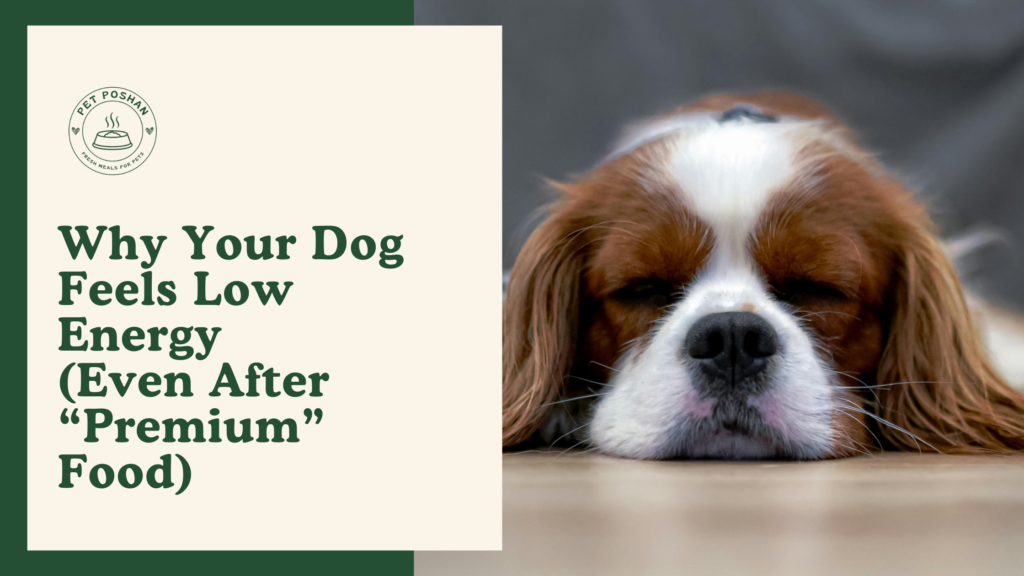
You upgraded their food. You read the labels. You paid more. And yet, your dog still seems tired. He wakes up slowly. Plays for a few minutes, then stops. Sleeps most of the day away. Not sick, just… flat. If this feels familiar, you’re not alone. And in many cases, nothing is wrong medically. The answer might be sitting right there in his bowl. The “Premium” Promise Most Dog Foods Don’t Deliver   When a dog food says “premium,” it often reflects premium marketing, not necessarily premium nutrition. Many expensive dry foods and packaged meals are still built around: Cereal grains and starch-heavy fillers Plant-based proteins instead of real meat Highly processed ingredients designed for shelf life Your dog eats it. Feels full. But “full” is not the same as “fuelled”. This is where many dog parents get misled, and it’s completely understandable. The packaging looks trustworthy, the brand is well-known, and labels like “complete and balanced” feel reassuring. But those labels don’t guarantee that your dog is actually thriving. If you’ve ever tried to decode what actually makes a “good” dog diet, this breakdown on what to feed your dog daily in India can help simplify things → Dog Diet Guide India What Actually Gives Dogs Energy Dogs are biologically built to run on animal protein and fat. These nutrients: Support muscle repair Provide steady, usable energy Help maintain overall vitality On the other hand, many “premium” kibbles contain 40–60% carbohydrates. Not because dogs need them, but because carbs are inexpensive and help bind kibble during processing. This often leads to: Quick energy spikes Followed by noticeable crashes Very similar to how we feel after sugary or processed meals. The Digestion Factor Most People Overlook Here’s something rarely talked about: A dog’s digestive system isn’t designed for heavily processed food every day. Kibble goes through high-heat extrusion, which: Reduces natural nutrients Alters protein structure Requires synthetic vitamins to be added back The issue? The body doesn’t always absorb synthetic nutrients as effectively as natural ones. So even if the food looks “complete” on paper, your dog may be absorbing far less than expected. Over time, this shows up subtly: Low energy Dull coat Loose stools Reduced enthusiasm Not dramatic symptoms. Just a dog that never quite seems like himself. Signs Your Dog’s Food Might Be the Problem If your dog seems consistently low on energy, it’s worth asking: What’s the first ingredient? (Is it real meat or grain/filler?) How processed is the food? How is digestion? (Loose stools, gas, irregular appetite?) Did this start after a change in diet? Often, the shift is gradual, which makes it easy to miss. In fact, many of these issues come down to small, unnoticed habits. Here are some of the most common dog feeding mistakes pet parents make → Dog Feeding Mistakes What Fresh Food Does Differently Fresh, minimally processed food works with your dog’s body, not against it. Real meat, veggies, and nutrient-balanced meals are highly beneficial.  Better Nutrient Absorption – Whole ingredients are easier to digest and use efficiently. Stable Energy Levels – Protein + natural fats provide sustained energy, no spikes and crashes. Improved Hydration – Fresh food contains natural moisture, supporting digestion and overall health. Gut Health Support – A healthier gut microbiome directly impacts energy, mood, and immunity. And the result? A dog that feels more active, more engaged, and more like themselves. The “Fresh Food Difference” (What You Might Notice) Many dog parents report small but meaningful changes: More excitement at mealtimes Increased playfulness Better stool consistency Shinier coat and brighter eyes It’s not a dramatic overnight transformation. Just a noticeable return to what your dog should feel like. One Small Step to Try You don’t need to overhaul your dog’s entire diet overnight. A simple way to start is by introducing fresh food alongside their current meals and observing the difference. Sometimes, within a few days, you’ll notice: A little more energy More interest in food A subtle but clear shift in behavior Try It for Yourself If your dog has seemed low on energy lately, it might be time to look beyond the label and into the bowl. Try a fresh meal sample from Pet Poshan. Real ingredients. Home-style cooking. Made for everyday feeding. No commitment, just a chance to see how your dog responds. Because sometimes, the simplest change makes the biggest difference. Get My Sample Free samples available from the 16th to the 30th April 2026.

Why Your Dog Feels Low Energy (Even After “Premium” Food) Read More »

7 Subtle Feeding Mistakes Even Loving Pet Parents Make

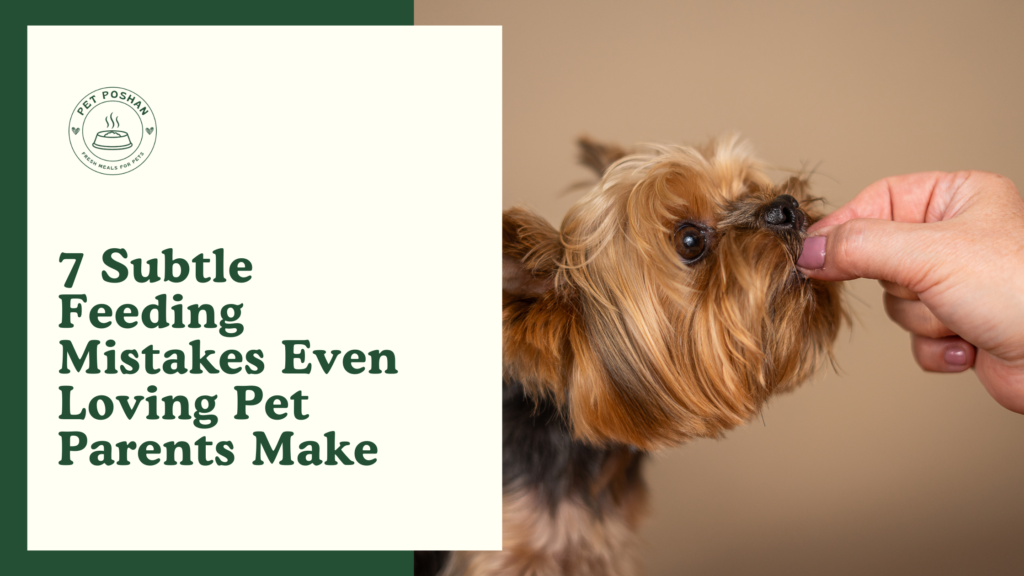
In India, food is one of the ways we express love. A little extra paneer. A biscuit from the tea tray. A bowl topped with “just a bit more.” But sometimes, that love unintentionally leads to small feeding habits that can affect a dog’s long-term health. Most dog feeding mistakes don’t come from neglect. They come from care. Here are seven subtle mistakes even thoughtful pet parents make, and how to gently correct them. 1. The “Chicken and Rice” Forever Diet Chicken and rice is often the first meal recommended when a dog has an upset stomach. But many households continue feeding it long-term. The Mistake While easy to digest, chicken and rice alone lack several essential micronutrients such as calcium, zinc, and Vitamin D. Over time, this may lead to nutrient deficiencies in dogs. The Fix If feeding home-cooked meals regularly, ensure the diet includes: varied protein sources organ meats vegetables calcium sources or veterinary-approved balancers A nutritionally complete diet matters more than simplicity. 2. Eyeballing Portion Sizes “A little extra today” can slowly become the new normal. One of the fastest-growing health issues among pets today is dog obesity in India. The Mistake Estimating portions by sight rather than measurement. Even small daily excess calories can lead to gradual weight gain. The Fix Use a measuring cup or kitchen scale. Reassess portion sizes every few months based on weight, activity level, and age. 3. Switching Food Too Quickly Found a better brand of dog food and switched immediately? A dog’s digestive system may not agree. The Mistake Sudden food changes disrupt gut bacteria and may cause: diarrhea bloating vomiting reduced appetite The Fix Follow a 7-day transition rule: Days 1–2: 25% new food + 75% old Days 3–4: 50% new food + 50% old Days 5–6: 75% new food + 25% old Day 7: 100% new food Gradual transitions protect gut balance in dogs. 4. Ignoring Treat Calories Treats feel small, but calories add up quickly. For small dogs, especially, a biscuit can represent a significant percentage of daily calories. The Mistake Treats exceeding recommended limits. The Fix Treats should not exceed 10% of daily calorie intake. Healthier alternatives can include: small carrot pieces cucumber slices plain boiled chicken bits 5. Feeding from the Table Sharing food is part of family culture, but many Indian dishes contain ingredients that are harmful to dogs. The Mistake Foods containing: onion garlic excess salt heavy spices These may cause digestive issues or toxicity in dogs. The Fix If you want to share food, set aside a small portion before adding spices or seasoning. 6. Misreading the “Always Hungry” Signal Many pet parents wonder: “Why is my dog always hungry?” In reality, begging behavior is often learned, not hunger-driven. The Mistake Responding to begging with additional food. The Fix Instead of extra snacks: Ensure meals contain enough fibre Increase play or enrichment activities Reinforce non-food rewards like attention or toys 7. Free Feeding Without Monitoring Leaving food available all day may seem convenient. But it makes portion control difficult. The Mistake Constant bowl access can lead to unnoticed overeating and weight gain. The Fix Offer measured meals at consistent times each day. This supports: Better digestion Appetite regulation Healthy body weight How Do You Know If You’re Overfeeding? Signs may include: Ribs becoming difficult to feel Reduced stamina during walks Gradual weight gain Increased lethargy A simple rule: you should be able to feel your dog’s ribs easily without seeing them prominently. If your dog is showing signs like low energy or poor digestion, here are 7 signs your dog’s food isn’t working. The Pet Poshan Perspective Feeding well is one of the most powerful acts of care we offer our dogs. Small adjustments, measuring portions, balancing nutrients, and understanding their needs, can prevent many long-term health complications. Because informed feeding doesn’t just fill a bowl. It builds stronger, healthier lives. Many feeding mistakes happen simply because pet parents lack clear information about dog nutrition. Understanding balanced nutrition is the first step. Read our complete guide to dog nutrition in India to learn how to build a healthier diet for your dog. At Pet Poshan, we believe thoughtful nutrition is the foundation of a lifelong bond between pets and the people who love them.

7 Subtle Feeding Mistakes Even Loving Pet Parents Make Read More »

Feeding Through the Years: A Thoughtful Dog Feeding Guide by Age

From the playful chaos of puppyhood to the quieter rhythm of senior years, a dog’s nutritional needs change constantly. Feeding a growing puppy the same way you feed a senior dog isn’t just ineffective; it affects their long-term health.  Understanding a dog feeding guide by age helps ensure your dog receives the right nutrients at the right stage of their life. This is because, while their personality may stay the same, their bodies are constantly evolving. The Puppy Phase: Building the Foundation (0-12 Months) Puppies aren’t simply tinier versions of dogs. They are biological construction sites, rapidly building bone, muscle, brain tissue, and immunity. Their diet must support several critical processes simultaneously. Key Nutritional Needs Higher protein levels to support muscle development Healthy fats to fuel rapid growth Balanced calcium and phosphorus for strong bone formation DHA (Omega-3) for brain and cognitive development Immune-supporting nutrients for early disease protection Calcium balance is especially important. Too little can weaken bones, while excessive calcium, particularly in large breeds like Labradors or German Shepherds, may lead to skeletal issues. Feeding Frequency Small stomachs require frequent meals: Small dogs, with smaller stomachs, require smaller portions but more frequent feeding than older dogs. 2-4 months: 4 meals per day 4-8 months: 3 meals per day 8-12 months: Gradually transition to 2 meals per day If you’re looking for a puppy feeding guide in India, ensure the food is specifically formulated for growth. The Adult Stage: Maintenance and Vitality (1-7 Years) Once a dog reaches maturity, nutrition shifts from growth to maintenance. The goal now is to sustain energy levels, support organ health, and maintain a healthy body weight. Key Nutritional Focus Stable protein intake to maintain lean muscle Healthy fats for skin, coat, and energy Controlled calorie intake to prevent weight gain Dietary fibre to support digestion and gut health Activity level plays a significant role here. An Indie dog running daily in the park will require more calories than an apartment pet with minimal exercise. Similarly, working dogs, highly active breeds, and dogs living in cooler climates often need more energy-dense diets. Feeding Frequency Most adult dogs thrive on two balanced meals per day, morning and evening. This schedule helps regulate digestion and prevents overeating. The Senior Years: Supporting Graceful Aging (7+ Years) As dogs enter their senior years, metabolism slows, but their nutritional needs become more specific. A thoughtful diet for senior dogs focuses on maintaining mobility, digestive comfort, and overall vitality. Nutritional Priorities for Senior Dogs Reduced calorie intake to prevent weight gain Joint support nutrients such as glucosamine and chondroitin Easily digestible protein sources Omega-3 fatty acids to help manage inflammation Many aging dogs benefit from diets that prioritize nutrient density over volume. Signs Your Senior Dog’s Diet May Need Adjustment Watch for subtle changes such as: Increased sleep or lower energy Weight gain despite unchanged portions Stiffness when standing or walking Reduced appetite or slower digestion Small dietary adjustments can significantly improve quality of life. How Much Should You Feed? Portion size depends on several factors: Body weight Breed size Activity level Metabolism Neutering status While feeding guidelines on packaging provide a starting point, every dog is different. General Feeding Guide (Adult Dogs) Dog Weight Approx. Daily Intake 2-5 kg 50-100 g 5-12 kg 100-200 g 12-25 kg 200-400 g 25-40 kg 400-600 g 40 kg+ 600 g+ Avoid free-feeding (making food available all day). Measured portions help maintain a healthy weight and digestion. Even well-intentioned feeding habits can sometimes lead to issues over time. Learn about common dog feeding mistakes many pet parents unknowingly make. Frequently Asked Questions How much should I feed my puppy? Start with the feeding guidelines provided on the food label and adjust based on your puppy’s body condition. You should be able to feel their ribs easily without seeing them prominently. When should I switch from puppy to adult food? Small breeds: around 10-12 months Large breeds: 14-18 months Large breeds mature more slowly, so transitioning too early may affect joint development. What should senior dogs with joint issues eat? Look for diets rich in Omega-3 fatty acids, glucosamine, and anti-inflammatory ingredients that support joint mobility and reduce stiffness. How many times should I feed my dog? For most adult dogs, two meals per day provides the best balance between digestion, appetite control, and energy regulation. The Pet Poshan Perspective Feeding your dog is one of the most meaningful daily acts of care. But feeding them according to their life stage is what truly supports lifelong health. When nutrition evolves alongside your dog, from energetic puppy to wise senior, you aren’t simply filling a bowl. You are helping them live longer, healthier, and happier lives. At Pet Poshan, thoughtful nutrition is one of the most powerful ways to nurture the bond you share with your dog.

Feeding Through the Years: A Thoughtful Dog Feeding Guide by Age Read More »

The Modern Indian Pet Parent’s Guide to Balanced Dog Nutrition

In India, we express love through food. An extra dollop of ghee, a shared piece of paneer, a warm bowl prepared just for them. Our dogs are family, and naturally, they are included in our rituals of care. But there is a quiet difference between a full stomach and a nourished body. As the pet care landscape evolves, more families are asking: What should I feed my dog in India for long-term health? This guide simplifies the essentials of dog nutrition in India so that you can feed with confidence, not confusion. What a Balanced Diet for Dogs Truly Looks Like Dogs are facultative carnivores, biologically designed to thrive on meat, while being able to digest certain plant-based nutrients. A truly balanced diet includes precise proportions of: Protein: The building blocks of muscle, immunity, skin, and coat health. Look for high-quality animal sources such as chicken, fish, eggs, or mutton. Healthy Fats & Omegas: Provide energy and support brain function. Omega-3 and Omega-6 fatty acids reduce inflammation and maintain coat shine. Digestible Carbohydrates: Provide glucose for energy and fibre for digestive health. In India, well-cooked rice and oats are commonly digestible options. Vitamins & Minerals: Calcium, phosphorus, zinc, iron, Vitamin A, and B-complex are essential and frequently under-balanced in home diets. Hydration: Water is the most overlooked nutrient. In India’s warm climate, consistent hydration is non-negotiable. A balanced diet for dogs is not about trends. It is about meeting biological requirements. Feeding requirements also change as dogs grow from energetic puppies to slower senior companions. If you’re unsure how nutrition evolves across different life stages, read our dog feeding guide by age. The Golden Standards: How to Know If Food Is Complete Globally, two organizations define nutritional benchmarks: AAFCO FEDIAF When a product states “complete and balanced,” it means the formulation meets established nutrient profiles for a specific life stage, puppy, adult, or senior. Every nutrient has a role. Deficiency and excess both carry consequences. Home-Cooked Meals vs Commercial Kibble: A Balanced Perspective Home-Cooked Meals Pros: Fresh ingredients, control over sourcing, emotional comfort. Challenge: Extremely difficult to balance calcium, zinc, Vitamin D, and trace minerals without veterinary formulation. Chicken and rice, while gentle and digestible, rarely meet long-term micronutrient requirements on their own. Commercial Kibble Pros: Scientifically formulated, convenient, complete nutrition when reputable. Challenge: Quality varies widely. Ingredient sourcing matters. The real question is not “home vs packaged.” It is : Is the diet nutritionally complete for my dog’s age, weight, and activity level? Many Indian pet parents find success with a thoughtful mixed-feeding approach, using high-quality kibble as a nutritional base, topped with fresh additions like boiled eggs or plain curd. Why Indian Climate & Lifestyle Matter Dog nutrition in India cannot blindly mirror Western guidelines. High ambient temperatures Apartment-based sedentary lifestyles Increased exposure to environmental pathogens Variable exercise routines These factors influence: Caloric needs Hydration requirements Electrolyte balance Gut resilience Feeding plans must be contextual, not generic. Gut Health & the Canine Microbiome Modern veterinary science increasingly highlights the importance of dog microbiome health. Immunity Nutrient absorption Stool quality Mood and energy levels Supporting Gut Health Probiotics: Beneficial bacteria (found in plain dahi or supplements). Prebiotics: Fibre that nourishes good bacteria. Balanced Formulation: Prevents chronic digestive stress. Signs of imbalance may include recurring loose stools, excessive gas, or inconsistent appetite. A healthy gut is often the foundation of a healthy dog. How to Read a Dog Food Label Ensure a named protein (e.g., “Chicken”) appears first Look for “complete and balanced” Review guaranteed analysis (protein, fat, fibre percentages) Avoid vague terms like “animal derivatives” or unspecified fats Clarity in labeling reflects clarity in formulation. Frequently Asked Questions What is a balanced diet for dogs? A diet providing protein, fats, carbohydrates, vitamins, and minerals in correct ratios tailored to life stage and activity level. How much protein does a dog need? Adult dogs typically require 18–25% protein (dry matter basis), while puppies require higher levels for growth. Can I feed my dog home-cooked food only? Yes, but only with veterinary-approved recipes or nutrient balancers. Most unsupervised home diets lack critical micronutrients. Is rice good for dogs? Yes. Properly cooked rice is easily digestible and suitable for many Indian dogs, as part of a balanced diet. The Pet Poshan Philosophy Understanding what to feed your dog in India does not need to feel overwhelming. High-quality protein Balanced micronutrients Gut-friendly ingredients Contextual feeding for Indian conditions You are not just filling a bowl. You are investing in longevity. At Pet Poshan, we believe nutrition is not just about feeding. It is about nurturing, thoughtfully, consistently, and with care.

The Modern Indian Pet Parent’s Guide to Balanced Dog Nutrition Read More »