Dog Health & Wellness

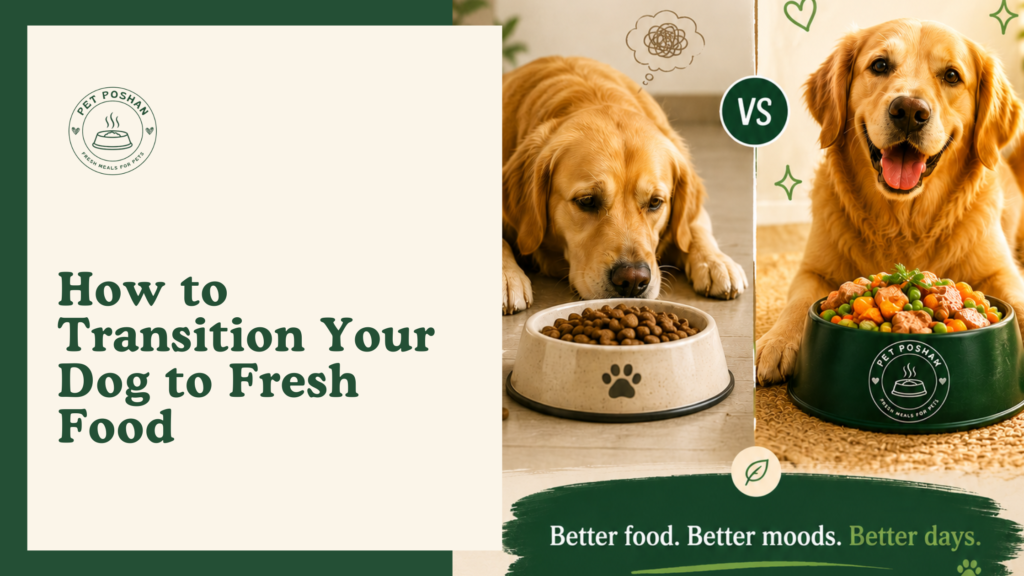
How to Transition Your Dog to Fresh Food (Without Upsetting Their Stomach)

Switching your dog’s diet from kibble to fresh food can feel risky. You may have heard things like: “My dog got loose motions after changing food.” “He stopped eating completely.” So even if you want to feed better, you hesitate. The truth is: 👉 It’s not fresh food that causes issues. 👉 It’s how the transition is done. Follow the right process, and most dogs switch comfortably – often with noticeable health improvements. Why Dogs Get an Upset Stomach When Changing Food Your dog’s digestive system is highly adaptive – but not instant. When you suddenly change food: Gut bacteria need time to adjust Digestive enzymes shift based on diet Texture + moisture differences affect digestion A sudden switch = temporary imbalance → loose stools, gas, or refusal to eat 👉 That’s why gradual transition is non-negotiable when you switch dog food without upsetting the stomach.  The Best Dog Food Transition Plan (7-Day Method)  Here’s a simple, vet-recommended way to switch your dog safely: What Happens in 7 Days After Switching 👉 This is a normal, gradual dog food transition process. What to Expect During the Transition Some small changes are completely normal: Slightly softer stools Increased appetite (fresh food is more palatable) More excitement at mealtime What’s not normal: Continuous diarrhoea Vomiting Lethargy If you notice these, slow down the transition instead of stopping completely. Pro Tips to Switch Dog Food Without Upsetting the Stomach 1. Start with One Meal Instead of changing all meals at once, begin with just one. 2. Stick to a consistent schedule Dogs digest better with routine. 3. Avoid mixing too many new foods Keep it simple – don’t add treats or extras during transition. 4. Don’t Worry About Water Intake Fresh food has higher moisture – reduced water drinking is normal. Common Mistakes Pet Parents Make Switching overnight out of excitement Feeding unbalanced homemade food Giving up too early after minor stool changes Remember: 👉 Transition discomfort is usually temporary 👉 Long-term benefits far outweigh the short adjustment phase Fresh Dog Food Benefits After Transition Once your dog adapts, you’ll likely notice: Better digestion Shinier coat Improved energy Healthier weight Because fresh food is: Minimally processed Free from artificial preservatives Closer to what your dog’s body naturally thrives on 👉 Read more on Fresh Food vs Kibble for Dogs How Pet Poshan Helps You Transition Safely We simplify the switch so your dog adapts comfortably: With Pet Poshan: Pre-portioned, fresh, ready-to-serve meals Portion guidance tailored to your dog Recipes designed for easy digestion  So your dog adapts comfortably – without stress. Ready to Switch Your Dog to Fresh Food? A smooth transition comes down to one thing: doing it right. Start slow, stay consistent – and your dog will adjust comfortably. If you want expert support and balanced, fresh meals: 👉 Explore Fresh Dog Food Meal Plans Start Your Dog’s Fresh Food Journey Today FAQs How to transition a dog to fresh food safely? Use a gradual 7-day transition plan by slowly increasing fresh food while reducing old food.  How long does it take to transition a dog to fresh food? Typically, 7-10 days using a gradual dog food transition plan. Can I switch my dog to fresh food immediately? No, sudden changes can upset digestion. Always transition gradually. What if my dog gets loose motions after changing food? Slow down the transition and give the digestive system more time to adjust.

How to Transition Your Dog to Fresh Food (Without Upsetting Their Stomach) Read More »
Is Your Dog’s Food Falling Short? 7 Signs It’s Time for a Switch

You measure the food. You stick to a routine. You’ve chosen something that should be good. And still… your dog feels off. Not sick. Just not thriving. Maybe they’re a little low on energy. Maybe their coat doesn’t shine like it used to. Maybe mealtimes feel more routine than exciting. Dogs can’t tell you when something isn’t working. But their body always does. You just need to know what to look for. 🐶 1. Low or Inconsistent Energy   If your dog: Tires quickly Plays for a few minutes, then stops Seems less interested in walks …it may be a sign they’re not getting steady, usable energy from their food. 👉 If this sounds familiar, here’s a deeper look at why your dog may still feel low on energy even after eating well. 💨 2. Frequent Gas or Bloating   Occasional gas is normal. Frequent bloating is not. This often points to: Low-quality fillers Highly processed ingredients Poor digestibility Food that isn’t properly digested tends to ferment in the gut, causing discomfort. 🪶 3. Dull Coat or Dry Skin   A healthy dog’s coat usually has a natural shine. If you notice: Dry, brittle fur Excess shedding Flaky skin …it may signal a lack of essential fatty acids like Omega-3 and Omega-6, or poor absorption of nutrients. 😐 4. Low Excitement at Mealtimes   Food should be the highlight of your dog’s day. If your dog: Walks away from the bowl Eats slowly or reluctantly Needs coaxing …it’s worth asking: 👉 Is the food actually appealing or just familiar? 💩 5. Poor Digestion (Stools Tell the Truth)   What you pick up on walks tells you more than any label. Healthy: Firm, consistent, easy to pick up Red flag: Loose, inconsistent, strong-smelling stools This usually means: Poor nutrient absorption Gut imbalance Food not suited to your dog ⚖️ 6. Weight Fluctuations   If your dog is: Gaining weight easily Or losing weight despite eating …it could point to: Imbalanced nutrition Incorrect calorie density Low bioavailability of nutrients 😴 7. Constant Hunger (But No Satisfaction)   If your dog always seems hungry, even after meals: The food may lack real nutrients The body isn’t feeling satisfied They may be full, but not truly nourished. Sometimes, these signs come from small habits we don’t even realise. Here are some of the most common dog feeding mistakes pet parents make. 🧠 What This Really Means These signs rarely appear overnight. They build slowly. Quietly. And because they’re subtle, they often get dismissed as: 👉 “That’s just how my dog is.” But often, it’s not the dog. It’s the food. If you’re wondering whether your current food might be the issue, here’s a simple breakdown of the difference between kibble and fresh dog food.  🍲 What Better Food Looks Like   Food that truly works for your dog should: Be easy to digest Provide steady energy Support gut health Improve skin and coat Actually excite them at mealtime Fresh, minimally processed meals tend to do this better because they’re closer to what a dog’s body naturally understands. 👉 If you’re unsure what a balanced diet should actually look like, this guide on what to feed your dog daily in India breaks it down simply. 🔄 A Note on Switching Food If you decide to make a change, avoid switching overnight. Instead: Mix new food with current food Gradually increase over 7-10 days This helps prevent digestive upset and allows your dog to adjust comfortably. 🎁 See the Difference for Yourself   You don’t need to guess. You can observe. Try a fresh meal and notice: Their energy Their excitement Their digestion Try a FREE Sample Real ingredients. Home-style cooking. No pressure, just a chance to see what works better for your dog. Free samples available from the 16th to the 30th April 2026. 🐾 About Pet Poshan Pet Poshan makes fresh, home-style meals for dogs using real ingredients and no preservatives. Prepared daily and delivered fresh to select neighbourhoods in Pune.

Is Your Dog’s Food Falling Short? 7 Signs It’s Time for a Switch Read More »