Dog Nutrition

What Actually Goes Into Your Dog’s Bowl? Fresh vs Kibble Ingredients Explained

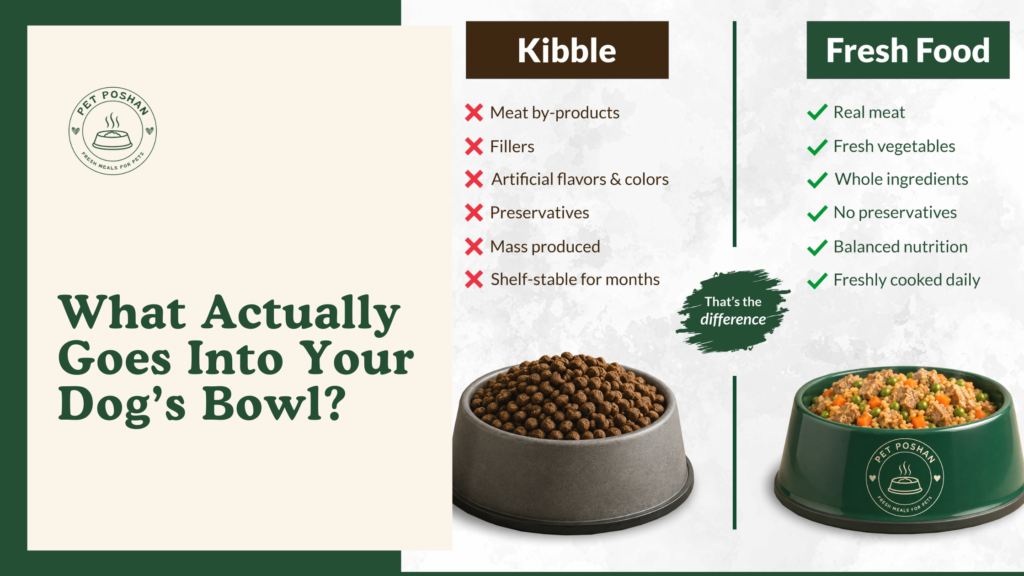
What Actually Goes Into Your Dog’s Bowl? A Breakdown of Fresh vs Kibble Ingredients Fresh dog food is made with whole, natural ingredients like real meat, vegetables, and grains, while kibble is typically made using processed meat meals, fillers, preservatives, and additives. Fresh food is minimally processed, whereas kibble undergoes high-heat processing that can reduce nutrient quality. Most pet parents don’t actually know what goes into their dog’s bowl. You read labels. You see words like “chicken,” “high protein,” and “complete nutrition.” But what do they really mean? Because what your dog eats every day directly impacts: Digestion  Energy levels  Skin and coat health  Long-term wellbeing  Let’s break it down – ingredient by ingredient – so you can make an informed choice. Fresh Dog Food vs Kibble: Ingredient Breakdown 1. Protein Source Fresh Dog Food: Real, identifiable meats (chicken, mutton, fish)  Cooked in small batches  Easier to digest  Kibble: Meat meals (chicken meal, meat by-products)  Rendered at high temperatures  May include unspecified animal parts  👉 What this means: Protein quality and digestibility are often higher in fresh food. 2. Carbohydrates & Fillers Fresh Dog Food: Whole ingredients like rice, vegetables, millets  Provide natural fibre and nutrients  Kibble: Corn, wheat, soy, or starch-heavy fillers  Used to bulk up the product  👉 What this means: Kibble often prioritizes shelf stability over nutritional quality. 3. Fats & Oils Fresh Dog Food: Natural fats from meat or added healthy oils  Support skin, coat, and energy  Kibble: Processed fats are sprayed after cooking  Can degrade over time  4. Preservatives & Additives Fresh Dog Food: No artificial preservatives  Uses natural cooking and refrigeration  Kibble: Requires preservatives to extend shelf life  May include artificial colours and flavours  👉 What this means: The longer the shelf life, the more processing is involved. 5. Processing Method Fresh Dog Food: Cooked gently  Minimal processing  Retains more nutrients  Kibble: Extruded at very high temperatures  Highly processed  Nutrients are often added back artificially  Why Ingredient Transparency Matters Dogs can’t tell you how they feel, but their bodies show it. Low-quality ingredients can lead to: Poor digestion  Dull coat  Low energy  Long-term health issues  👉 Knowing what’s inside the food helps you prevent problems before they start. What Most Dog Food Labels Don’t Clearly Tell You “Chicken meal” ≠ fresh chicken  “Complete and balanced” doesn’t mean high quality  Long ingredient lists often indicate heavy processing  👉 The simpler and more recognizable the ingredients, the better. Fresh Dog Food in India: A Growing Shift More pet parents in India are moving towards fresh food because they want: Better ingredient clarity  Less processed meals  Improved health outcomes for their dogs  This shift is not about trends – it’s about awareness. So, Which One Should You Choose? There’s no one-size-fits-all answer. But here’s a simple way to think about it: If convenience and shelf life matter most → kibble  If ingredient quality and long-term health matter more → fresh food  👉 Many pet parents today are choosing a gradual shift towards fresh meals. How Pet Poshan Focuses on Ingredient Transparency At Pet Poshan, we believe you should know exactly what goes into your dog’s bowl. That’s why we use: Real, whole ingredients  Clearly defined recipes  No artificial preservatives  So you’re not guessing – you’re choosing with confidence. Ready to Know Exactly What Your Dog Is Eating? Better food starts with better awareness. If you’re exploring fresh dog food options: 👉 Explore Fresh Dog Food Meal Plans 👉 Learn: How to Transition Your Dog to Fresh Food FAQs  What is the difference between fresh dog food and kibble? Fresh dog food uses real, minimally processed ingredients, while kibble is highly processed and often contains additives and preservatives. Is kibble bad for dogs? Not necessarily, but it is more processed and may be less digestible compared to fresh food. What ingredients should I avoid in dog food? Avoid vague terms like “meat by-products,” artificial preservatives, and excessive fillers. Is fresh dog food better for digestion? Yes, fresh food is generally easier to digest due to higher moisture content and natural ingredients.

What Actually Goes Into Your Dog’s Bowl? Fresh vs Kibble Ingredients Explained Read More »
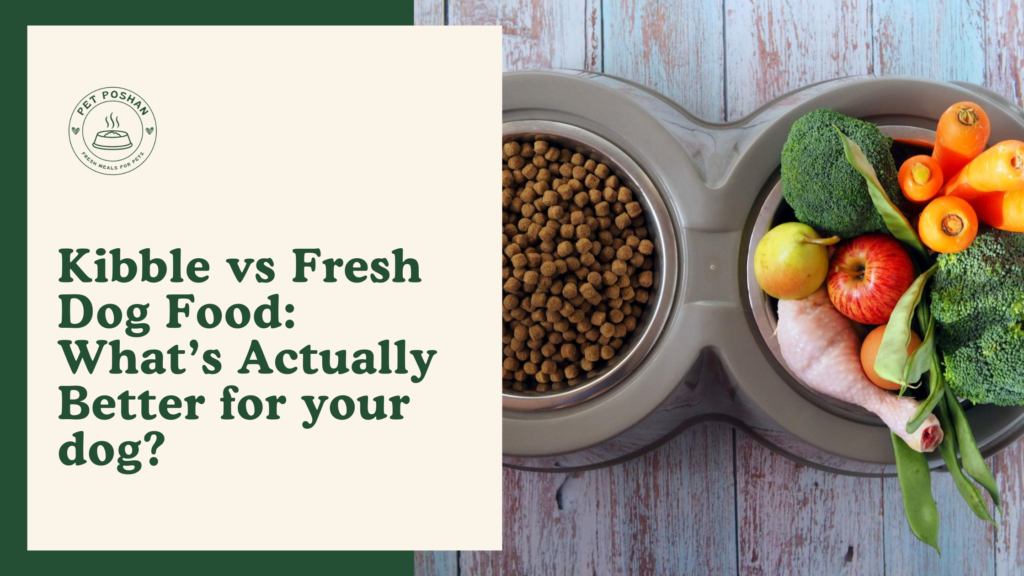
Kibble vs Fresh Dog Food: What’s Actually Better for your dog?

Every morning, you scoop out that familiar cup of brown pellets. Your dog eats it, tail wagging. You assume it’s doing its job, because the pack says “complete and balanced.” But then you start noticing things. A little gas. Dry, flaky skin. Restlessness after meals. Energy that feels… inconsistent. Nothing alarming. Just not quite right. So you wonder: 👉 Is the food actually working? 🥣 What’s Really Inside Kibble? Kibble is made through a process called extrusion. Ingredients, often grains, meat by-products, and fillers, are ground into a paste, cooked at very high temperatures, and shaped into pellets. This process: Kills harmful bacteria ✔ Extends shelf life ✔ But also reduces natural nutrients ✖ To compensate, manufacturers add synthetic vitamins and minerals back in. So when you read: “Fortified with calcium and Vitamin E.” …it usually means those nutrients were added after processing, not naturally present. Even ingredients like “chicken meal” can be misleading. It’s not fresh chicken. It’s a rendered, dried powder made from parts like bone, skin, and tissue. Not necessarily harmful, but very different from real, whole food. Here’s a simple breakdown of what a balanced dog diet should actually look like → Dog Diet Guide India 🔍 Kibble vs Fresh Food (Simple Comparison)   👉 That moisture difference matters more than most people realise. Dogs naturally get a large portion of hydration from food. Kibble is extremely dry, meaning your dog’s body has to compensate every single day. ⚡ Digestion: Where the Real Difference Shows A dog’s digestive system is built for real, minimally processed food. When dogs switch to fresh food, many pet parents notice: Smaller, Better Stools: Fresh food is more bioavailable; the body absorbs more and wastes less. Less Gas & Bloating: Whole ingredients are gentler on the gut compared to heavily processed fillers. Improved Overall Comfort: No heaviness, no sluggishness after meals. This isn’t a trend; it’s simply how digestion works when food is closer to its natural form. If your dog has been feeling low on energy despite eating well, here’s why that happens → Reasons for Low Energy 🔋 Energy & Vitality: The “Fresh Food Effect” Energy isn’t just about how much your dog eats. It’s about what their body can actually use. Kibble-Based Diets: High carbs → quick energy spikes Followed by dips → lethargy Fresh Food Diets: Protein + healthy fats → steady energy More consistent activity levels A noticeable “spark” returning Many dog parents describe it as: 👉 “They just seem more like themselves again.” 🧠 What “Complete & Balanced” Really Means Here’s something most people don’t know: “Complete and balanced” means the food meets minimum nutritional standards. Not optimal. Just adequate. Think of it like this: A person could survive on fortified cereal and supplements. But would they feel their best? Fresh food delivers nutrients in their natural form, which the body: Recognizes better Absorbs more efficiently Uses more effectively 🤔 So… Is Kibble Bad? Not necessarily. Kibble is: Convenient Affordable Widely used And good-quality kibble is definitely better than poor-quality food. But if your dog is showing signs like: Low or inconsistent energy Digestive issues Dull coat Lack of enthusiasm …it might be worth looking beyond convenience, and into the bowl. 🌱 A Smarter Way to Start You don’t need to switch everything overnight. A simple approach: Add fresh food to one meal a day Mix it into your dog’s current diet Observe changes over a few days Sometimes, even small changes create visible results. 🎁 See the Difference for Yourself The best way to decide isn’t by reading labels. It’s by watching your dog. Try a fresh meal and notice: Their energy Their excitement Their digestion Try a FREE Sample Real ingredients. Home-style cooking. No pressure, just a better way to feed. Free samples available from the 16th to the 30th April 2026. 🐾 About Pet Poshan At Pet Poshan, we cook fresh meals for dogs every day using simple, whole ingredients. No fillers. No shortcuts. Just real food, made to support long-term health.

Kibble vs Fresh Dog Food: What’s Actually Better for your dog? Read More »

Why Your Dog Feels Low Energy (Even After “Premium” Food)

You upgraded their food. You read the labels. You paid more. And yet, your dog still seems tired. He wakes up slowly. Plays for a few minutes, then stops. Sleeps most of the day away. Not sick, just… flat. If this feels familiar, you’re not alone. And in many cases, nothing is wrong medically. The answer might be sitting right there in his bowl. The “Premium” Promise Most Dog Foods Don’t Deliver   When a dog food says “premium,” it often reflects premium marketing, not necessarily premium nutrition. Many expensive dry foods and packaged meals are still built around: Cereal grains and starch-heavy fillers Plant-based proteins instead of real meat Highly processed ingredients designed for shelf life Your dog eats it. Feels full. But “full” is not the same as “fuelled”. This is where many dog parents get misled, and it’s completely understandable. The packaging looks trustworthy, the brand is well-known, and labels like “complete and balanced” feel reassuring. But those labels don’t guarantee that your dog is actually thriving. If you’ve ever tried to decode what actually makes a “good” dog diet, this breakdown on what to feed your dog daily in India can help simplify things → Dog Diet Guide India What Actually Gives Dogs Energy Dogs are biologically built to run on animal protein and fat. These nutrients: Support muscle repair Provide steady, usable energy Help maintain overall vitality On the other hand, many “premium” kibbles contain 40–60% carbohydrates. Not because dogs need them, but because carbs are inexpensive and help bind kibble during processing. This often leads to: Quick energy spikes Followed by noticeable crashes Very similar to how we feel after sugary or processed meals. The Digestion Factor Most People Overlook Here’s something rarely talked about: A dog’s digestive system isn’t designed for heavily processed food every day. Kibble goes through high-heat extrusion, which: Reduces natural nutrients Alters protein structure Requires synthetic vitamins to be added back The issue? The body doesn’t always absorb synthetic nutrients as effectively as natural ones. So even if the food looks “complete” on paper, your dog may be absorbing far less than expected. Over time, this shows up subtly: Low energy Dull coat Loose stools Reduced enthusiasm Not dramatic symptoms. Just a dog that never quite seems like himself. Signs Your Dog’s Food Might Be the Problem If your dog seems consistently low on energy, it’s worth asking: What’s the first ingredient? (Is it real meat or grain/filler?) How processed is the food? How is digestion? (Loose stools, gas, irregular appetite?) Did this start after a change in diet? Often, the shift is gradual, which makes it easy to miss. In fact, many of these issues come down to small, unnoticed habits. Here are some of the most common dog feeding mistakes pet parents make → Dog Feeding Mistakes What Fresh Food Does Differently Fresh, minimally processed food works with your dog’s body, not against it. Real meat, veggies, and nutrient-balanced meals are highly beneficial.  Better Nutrient Absorption – Whole ingredients are easier to digest and use efficiently. Stable Energy Levels – Protein + natural fats provide sustained energy, no spikes and crashes. Improved Hydration – Fresh food contains natural moisture, supporting digestion and overall health. Gut Health Support – A healthier gut microbiome directly impacts energy, mood, and immunity. And the result? A dog that feels more active, more engaged, and more like themselves. The “Fresh Food Difference” (What You Might Notice) Many dog parents report small but meaningful changes: More excitement at mealtimes Increased playfulness Better stool consistency Shinier coat and brighter eyes It’s not a dramatic overnight transformation. Just a noticeable return to what your dog should feel like. One Small Step to Try You don’t need to overhaul your dog’s entire diet overnight. A simple way to start is by introducing fresh food alongside their current meals and observing the difference. Sometimes, within a few days, you’ll notice: A little more energy More interest in food A subtle but clear shift in behavior Try It for Yourself If your dog has seemed low on energy lately, it might be time to look beyond the label and into the bowl. Try a fresh meal sample from Pet Poshan. Real ingredients. Home-style cooking. Made for everyday feeding. No commitment, just a chance to see how your dog responds. Because sometimes, the simplest change makes the biggest difference. Get My Sample Free samples available from the 16th to the 30th April 2026.

Why Your Dog Feels Low Energy (Even After “Premium” Food) Read More »

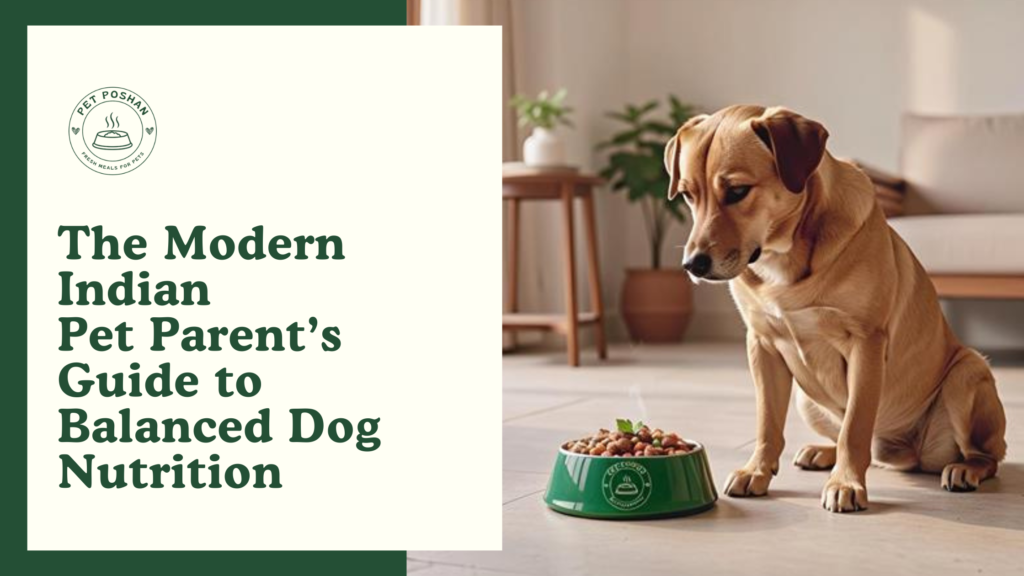
The Modern Indian Pet Parent’s Guide to Balanced Dog Nutrition

In India, we express love through food. An extra dollop of ghee, a shared piece of paneer, a warm bowl prepared just for them. Our dogs are family, and naturally, they are included in our rituals of care. But there is a quiet difference between a full stomach and a nourished body. As the pet care landscape evolves, more families are asking: What should I feed my dog in India for long-term health? This guide simplifies the essentials of dog nutrition in India so that you can feed with confidence, not confusion. What a Balanced Diet for Dogs Truly Looks Like Dogs are facultative carnivores, biologically designed to thrive on meat, while being able to digest certain plant-based nutrients. A truly balanced diet includes precise proportions of: Protein: The building blocks of muscle, immunity, skin, and coat health. Look for high-quality animal sources such as chicken, fish, eggs, or mutton. Healthy Fats & Omegas: Provide energy and support brain function. Omega-3 and Omega-6 fatty acids reduce inflammation and maintain coat shine. Digestible Carbohydrates: Provide glucose for energy and fibre for digestive health. In India, well-cooked rice and oats are commonly digestible options. Vitamins & Minerals: Calcium, phosphorus, zinc, iron, Vitamin A, and B-complex are essential and frequently under-balanced in home diets. Hydration: Water is the most overlooked nutrient. In India’s warm climate, consistent hydration is non-negotiable. A balanced diet for dogs is not about trends. It is about meeting biological requirements. Feeding requirements also change as dogs grow from energetic puppies to slower senior companions. If you’re unsure how nutrition evolves across different life stages, read our dog feeding guide by age. The Golden Standards: How to Know If Food Is Complete Globally, two organizations define nutritional benchmarks: AAFCO FEDIAF When a product states “complete and balanced,” it means the formulation meets established nutrient profiles for a specific life stage, puppy, adult, or senior. Every nutrient has a role. Deficiency and excess both carry consequences. Home-Cooked Meals vs Commercial Kibble: A Balanced Perspective Home-Cooked Meals Pros: Fresh ingredients, control over sourcing, emotional comfort. Challenge: Extremely difficult to balance calcium, zinc, Vitamin D, and trace minerals without veterinary formulation. Chicken and rice, while gentle and digestible, rarely meet long-term micronutrient requirements on their own. Commercial Kibble Pros: Scientifically formulated, convenient, complete nutrition when reputable. Challenge: Quality varies widely. Ingredient sourcing matters. The real question is not “home vs packaged.” It is : Is the diet nutritionally complete for my dog’s age, weight, and activity level? Many Indian pet parents find success with a thoughtful mixed-feeding approach, using high-quality kibble as a nutritional base, topped with fresh additions like boiled eggs or plain curd. Why Indian Climate & Lifestyle Matter Dog nutrition in India cannot blindly mirror Western guidelines. High ambient temperatures Apartment-based sedentary lifestyles Increased exposure to environmental pathogens Variable exercise routines These factors influence: Caloric needs Hydration requirements Electrolyte balance Gut resilience Feeding plans must be contextual, not generic. Gut Health & the Canine Microbiome Modern veterinary science increasingly highlights the importance of dog microbiome health. Immunity Nutrient absorption Stool quality Mood and energy levels Supporting Gut Health Probiotics: Beneficial bacteria (found in plain dahi or supplements). Prebiotics: Fibre that nourishes good bacteria. Balanced Formulation: Prevents chronic digestive stress. Signs of imbalance may include recurring loose stools, excessive gas, or inconsistent appetite. A healthy gut is often the foundation of a healthy dog. How to Read a Dog Food Label Ensure a named protein (e.g., “Chicken”) appears first Look for “complete and balanced” Review guaranteed analysis (protein, fat, fibre percentages) Avoid vague terms like “animal derivatives” or unspecified fats Clarity in labeling reflects clarity in formulation. Frequently Asked Questions What is a balanced diet for dogs? A diet providing protein, fats, carbohydrates, vitamins, and minerals in correct ratios tailored to life stage and activity level. How much protein does a dog need? Adult dogs typically require 18–25% protein (dry matter basis), while puppies require higher levels for growth. Can I feed my dog home-cooked food only? Yes, but only with veterinary-approved recipes or nutrient balancers. Most unsupervised home diets lack critical micronutrients. Is rice good for dogs? Yes. Properly cooked rice is easily digestible and suitable for many Indian dogs, as part of a balanced diet. The Pet Poshan Philosophy Understanding what to feed your dog in India does not need to feel overwhelming. High-quality protein Balanced micronutrients Gut-friendly ingredients Contextual feeding for Indian conditions You are not just filling a bowl. You are investing in longevity. At Pet Poshan, we believe nutrition is not just about feeding. It is about nurturing, thoughtfully, consistently, and with care.

The Modern Indian Pet Parent’s Guide to Balanced Dog Nutrition Read More »