Quick Answer
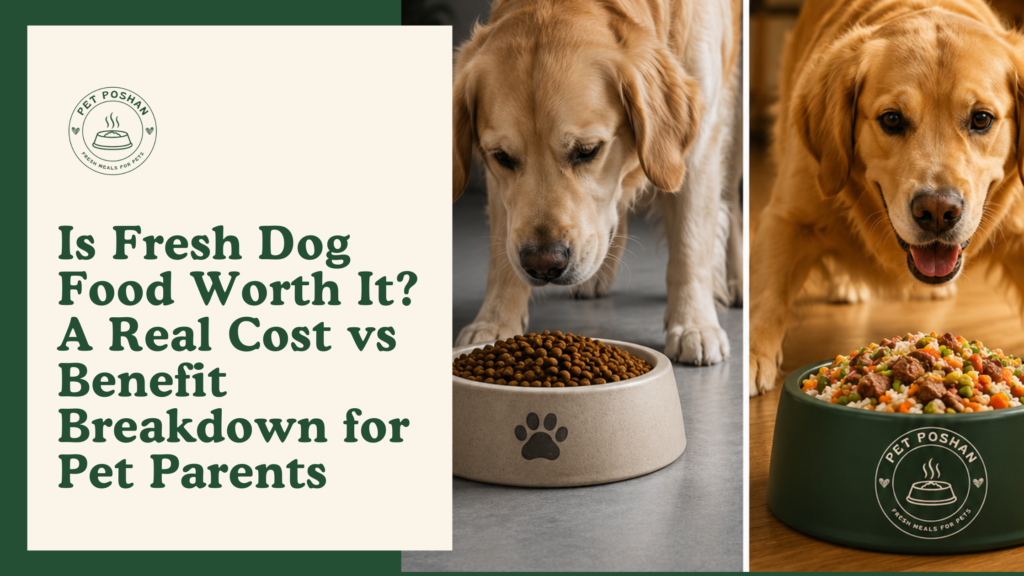
Yes, fresh dog food often costs more than kibble, but many pet parents find the investment worthwhile because of the quality of ingredients, ingredient transparency, digestibility, and the overall feeding experience. The real question isn’t just what you pay per meal, it’s what your dog gets from that meal.
If you’ve ever explored fresh dog food, you’ve probably had the same reaction as many pet parents:
“This looks great, but is it really worth the extra cost?”
It’s a fair question.
After all, kibble has been the standard choice for years, and fresh food often comes with a higher price tag.
But when evaluating dog food, the real question isn’t just:
“How much does it cost?”
It’s also:
“What am I getting for that cost?”
Let’s break it down honestly.
The True Cost of Dog Food: Looking Beyond the Price Tag
When comparing dog food options, most people focus on the cost of a bag or the cost per meal.
While price matters, it’s equally important to consider:
- Ingredient quality
- Ingredient transparency
- Digestibility
- Nutritional value
- Feeding experience
- Long-term wellbeing
Just like human food, two meals can have completely different nutritional value even if they contain the same number of calories.
Fresh Dog Food vs Kibble: What’s the Difference?
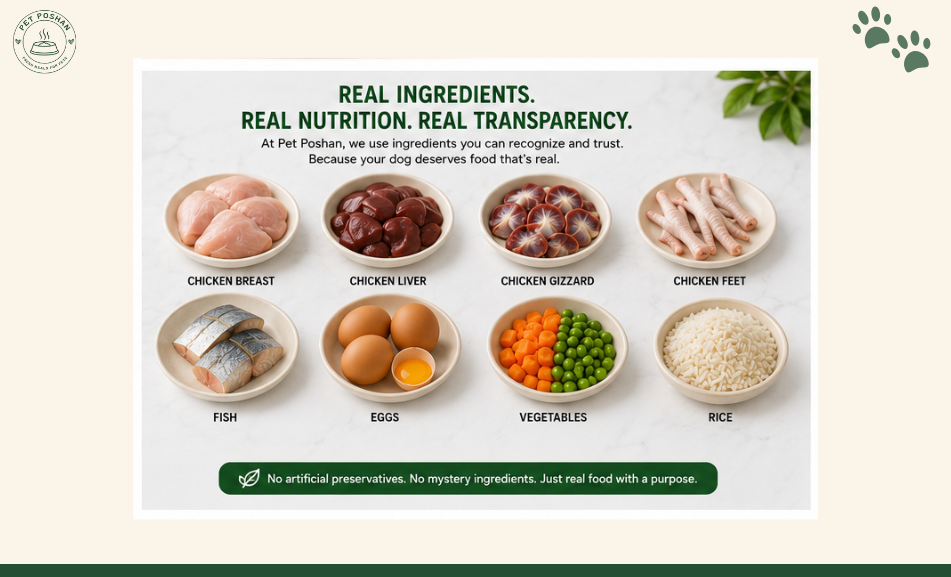
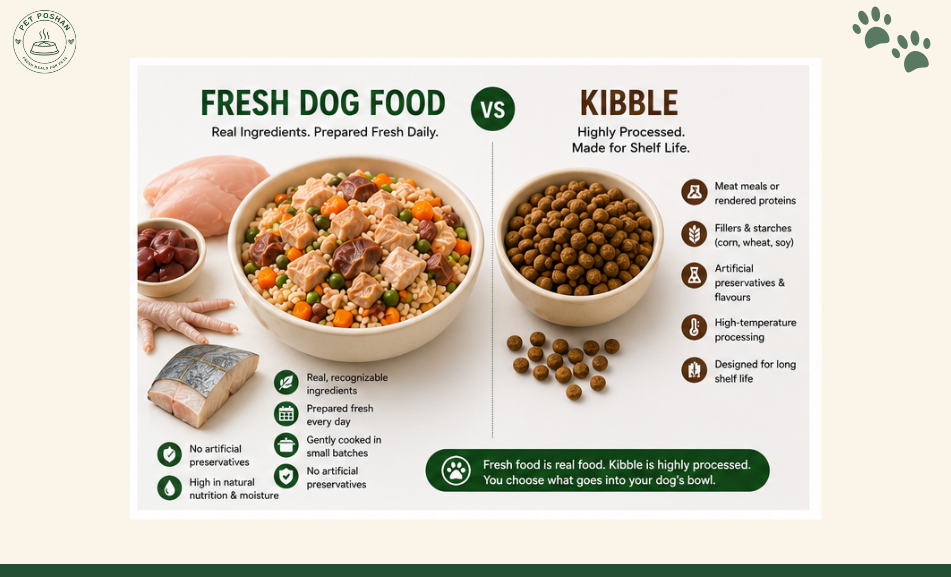
At Pet Poshan, our recipes are made using real, recognizable ingredients such as:
- Chicken breast
- Chicken liver
- Chicken gizzard
- Chicken feet
- Fish
- Eggs
- Vegetables
- Rice
Our meals are:
✅ Prepared fresh every day
✅ Made using ingredients you can actually recognize
✅ Gently cooked in small batches to preserve nutrition and flavour
✅ Free from artificial preservatives
✅ Stored and delivered fresh to maintain quality
👉 In simple terms, it’s real food made for dogs – not highly processed pellets.
Kibble
Typically contains:
- Meat meals or rendered protein sources
- Fillers and starches
- Artificial preservatives
- Added flavours
- Synthetic nutrient blends
It is usually:
- Manufactured in large batches
- Processed at high temperatures
- Designed for extended shelf life
- Packaged for storage for months
👉 While convenient, the focus is often on shelf stability rather than ingredient freshness.
👉 Read more: What Actually Goes Into Your Dog’s Bowl? Fresh vs Kibble Ingredients
Cost Comparison: Fresh Food vs Kibble
While costs vary based on breed, size, and feeding requirements, fresh food generally costs more than commercial kibble.
What You’re Paying For
With fresh food, you’re paying for:
✅ Real ingredients you can identify
✅ Fresh preparation
✅ Ingredient transparency
✅ Higher moisture content
✅ Convenience of balanced meal preparation
Unlike shelf-stable food designed to sit in storage for months, fresh food requires careful sourcing, preparation, storage, and delivery.
That’s one of the reasons fresh food typically costs more than kibble.
The Benefits Pet Parents Commonly Notice After Switching
Every dog is different, but many pet parents report positive changes after transitioning to fresh food.
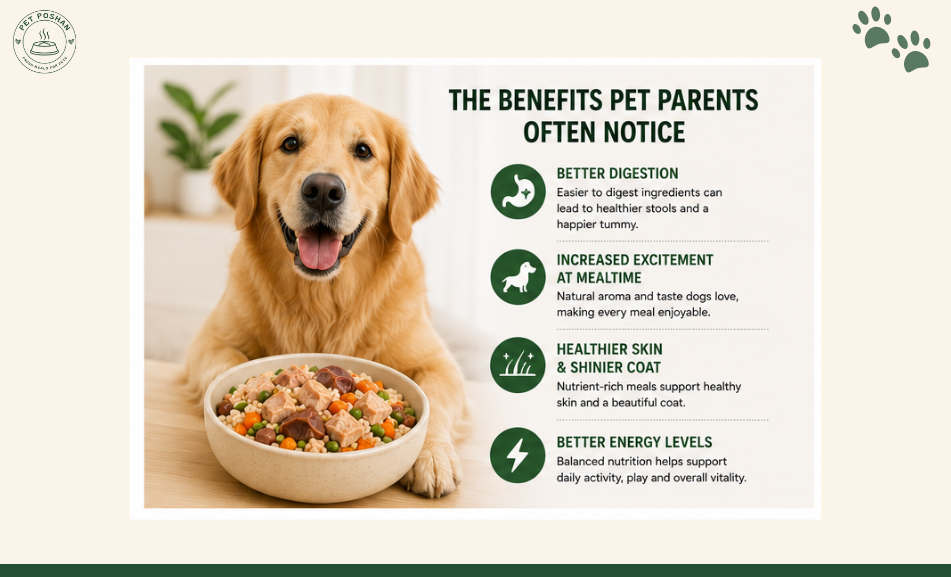
- Better Digestion
Fresh meals contain natural moisture and whole-food ingredients that are often easier for dogs to digest.
Many pet parents notice:
- More consistent stools
- Reduced digestive discomfort
- Improved overall gut health
- Healthier Skin and Shinier Coat
A nutrient-rich diet may contribute to:
- Shinier coats
- Reduced dryness
- Healthier skin
- Increased Meal Excitement
Dogs are naturally attracted to the aroma, texture, and taste of fresh food.
For many pet parents, mealtimes become something their dogs genuinely look forward to.
- Improved Energy Levels
When dogs receive balanced nutrition from quality ingredients, it often reflects in their daily activity levels.
Many pet parents observe:
- More playfulness
- Better stamina
- Improved overall vitality
The Hidden Cost of Cheap Nutrition
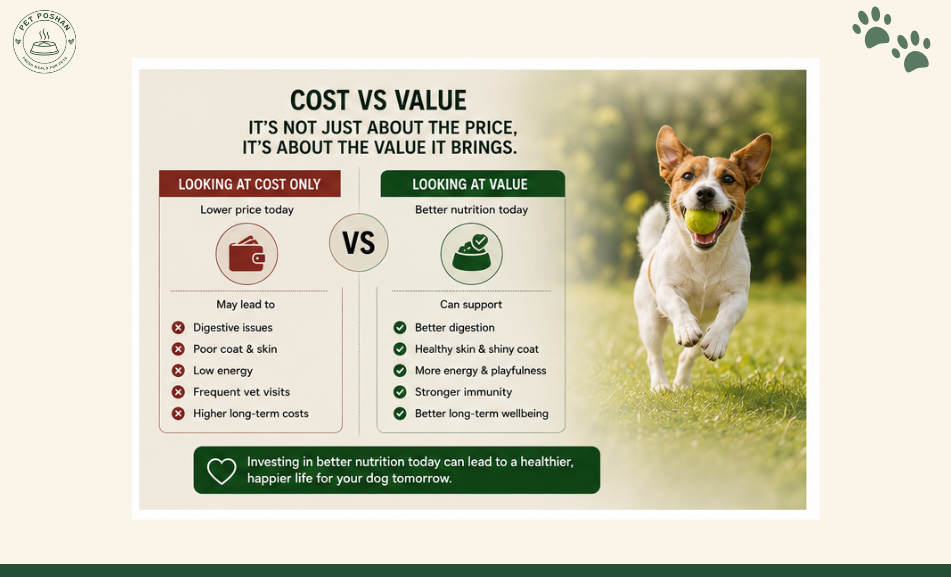
A lower food bill today doesn’t always mean lower overall costs.
When evaluating dog food, it’s important to think beyond the immediate purchase price.
Poor-quality nutrition can sometimes contribute to:
- Digestive issues
- Weight management challenges
- Poor coat quality
- Reduced vitality
- Lower overall wellbeing
While nutrition alone doesn’t determine health outcomes, it plays a significant role in your dog’s quality of life.
When Fresh Food May Be Especially Worth Considering
Fresh food may offer particular value for:
Puppies
Supporting healthy growth and development.
Senior Dogs
Providing nutrition that is often easier to digest.
Picky Eaters
Encouraging consistent eating habits.
Dogs with Sensitive Digestion
Reducing reliance on heavily processed ingredients.
Health-Conscious Pet Parents
Those who prioritize ingredient transparency and quality.
Why More Pet Parents Are Making the Switch
Today’s pet parents are asking better questions.
Instead of simply asking:
“How much does this food cost?”
They’re asking:
“What am I feeding my dog every day?”
“Can I recognize the ingredients?”
“Do I trust what’s in the bowl?”
That shift is one of the reasons fresh dog food in India is gaining popularity.
Pet parents want greater transparency, better ingredient quality, and nutrition they can understand.
How Pet Poshan Delivers Value Beyond the Bowl
At Pet Poshan, we believe trust starts with transparency.
That’s why our meals are:
- Prepared fresh every day
- Made with real ingredients
- Gently cooked in small batches
- Free from artificial preservatives
- Designed to provide balanced nutrition
We don’t believe pet parents should have to guess what’s inside their dog’s food.
Because every ingredient should have a purpose.
So, Is Fresh Dog Food Worth It?
If you’re only comparing the price per kilogram, fresh food will usually cost more.
But if you’re evaluating:
- Ingredient quality
- Digestibility
- Transparency
- Nutritional value
- Daily feeding experience
Then the conversation becomes much bigger than cost alone.
For many pet parents, fresh food isn’t just an expense.
It’s an investment in their dog’s health, happiness, and quality of life.
Ready to See the Difference for Yourself?
Many pet parents start with a trial before making a full switch.
👉 Explore Fresh Dog Food Meal Plans
👉 Learn How to Transition Your Dog to Fresh Food
👉 Compare Fresh Food vs Kibble Ingredients
FAQs
Is fresh dog food worth the extra cost?
Many pet parents believe so because fresh food offers real ingredients, greater transparency, daily preparation, and a feeding experience that prioritizes freshness over shelf life.
Why is fresh dog food more expensive than kibble?
Fresh food uses real ingredients, requires refrigeration, and is prepared in smaller batches, making production costs higher than shelf-stable kibble.
Is fresh dog food healthier than kibble?
Fresh food requires high-quality ingredients, daily preparation, refrigeration, and careful delivery, which increases production costs compared to shelf-stable kibble.
Can I switch from kibble to fresh food gradually?
Yes. Most experts recommend a gradual 7-10 day transition to help your dog’s digestive system adapt comfortably.